Reusable Cleanroom Matting and ESG: How Entryway Mats Cut Scope 3 Waste in Life Sciences
How entryway matting affects Scope 3 waste in life sciences, how to measure it, and how to switch from sticky mats without weakening contamination control.
Stay updated with the latest in contamination control, cleanroom technology, and industry best practices.

How entryway matting affects Scope 3 waste in life sciences, how to measure it, and how to switch from sticky mats without weakening contamination control.

Why sticky mats lose capture, shed debris when peeled and leave adhesive on soles, and what to look for in reusable cleanroom matting instead.

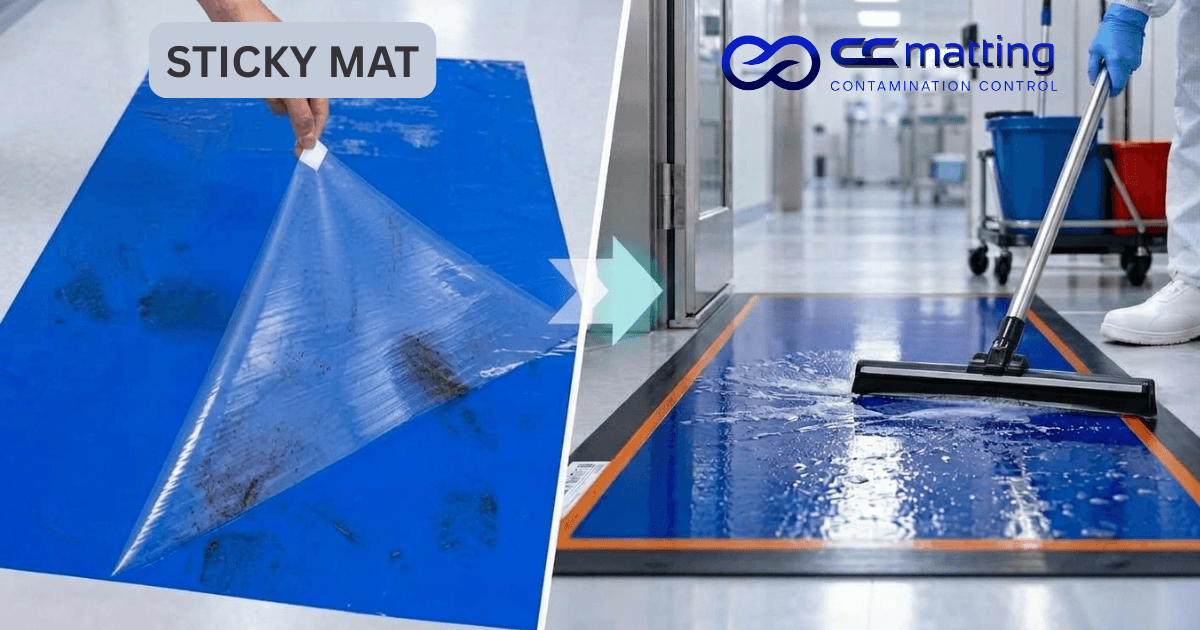
How to clean polymeric contamination control mats using standard squeegees and mild detergents, and fit reusable cleanroom matting into your existing cleaning SOP.

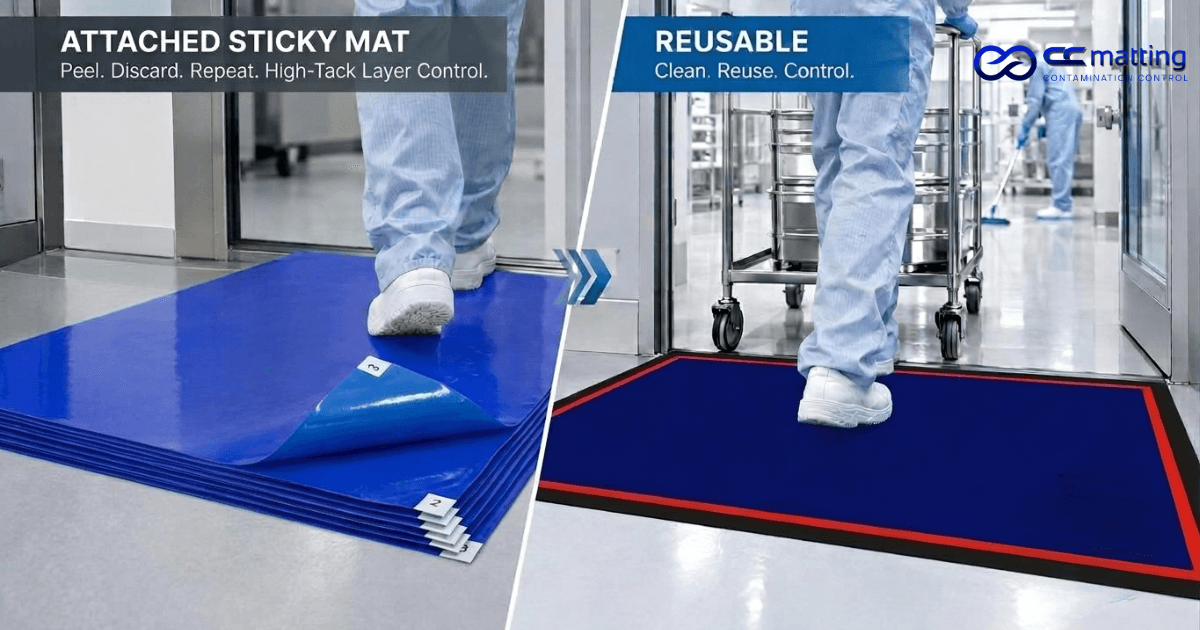
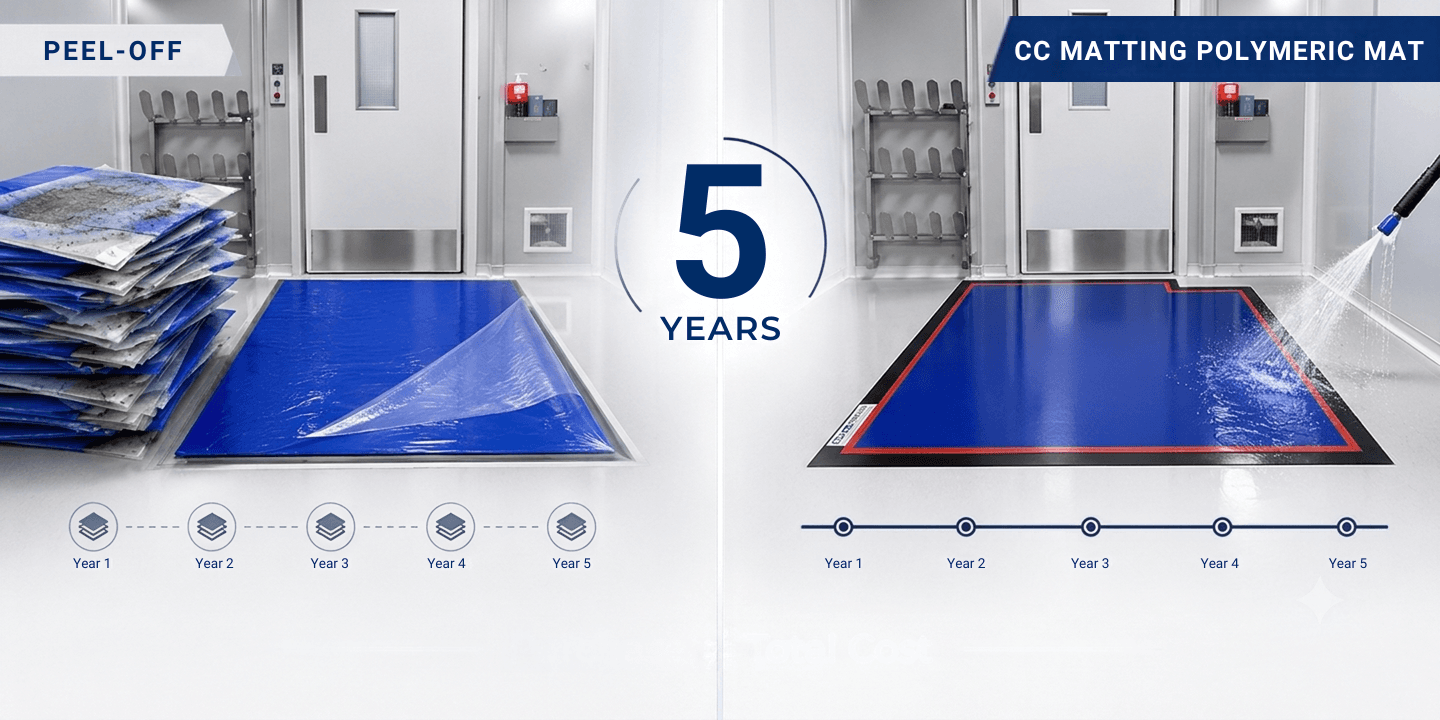
How much polyethylene film does one cleanroom doorway send to waste? We work through the numbers for 4–8 sheets a day and what reusable matting changes.

Discover how CC Matting combines engineered polymeric matting, professional installation and built-in Biomaster antimicrobial product protection for critical environments.

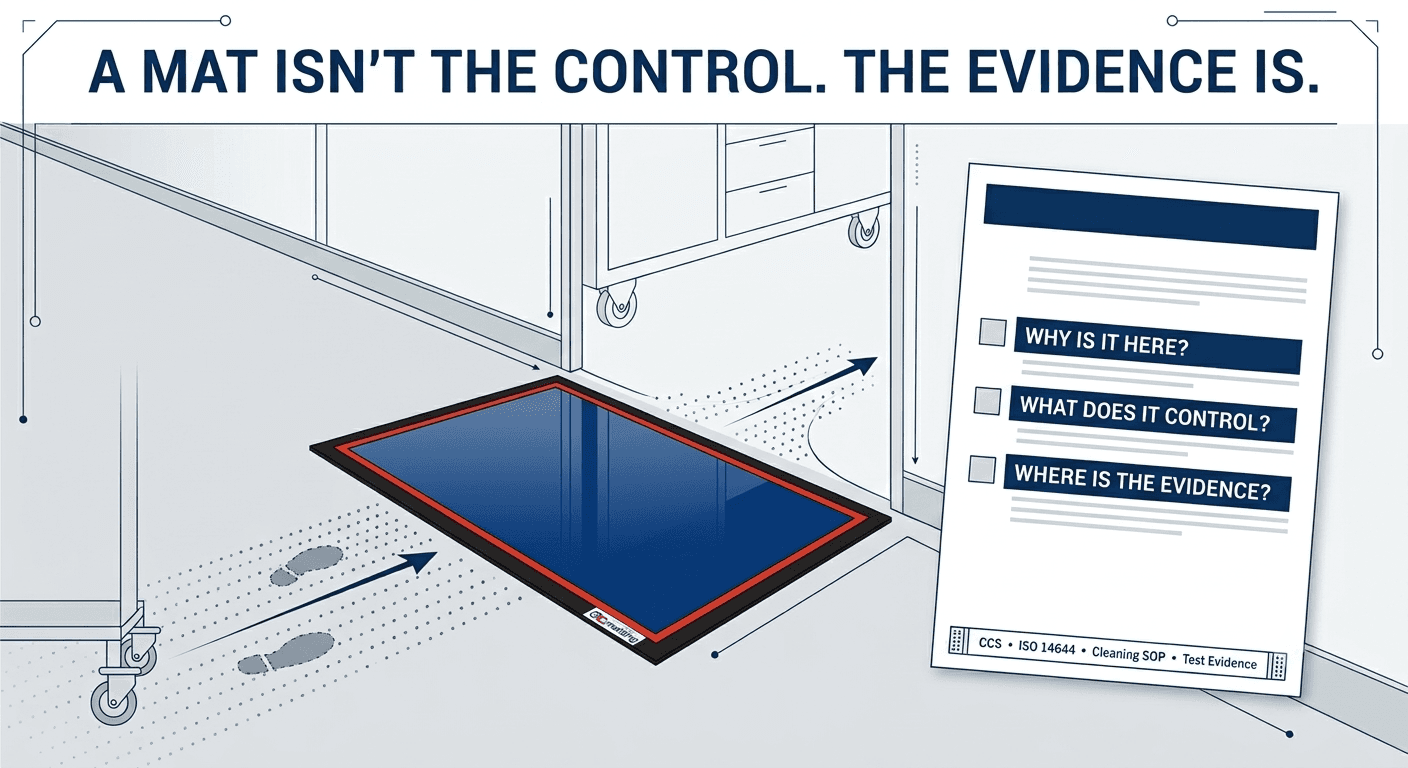
Auditors look beyond whether a cleanroom mat is installed. They want to know why it is there, what contamination route it controls, and what evidence proves it works. This article examines reusable polymeric cleanroom matting from an audit perspective, covering CCS justification under EU GMP Annex 1, ISO Class 5 suitability, contamination removal data, cleaning procedures, ESD performance, and required documentation. It also compares reusable polymeric mats with peel-off sticky mats and highlights the records and evidence facilities should have ready for an audit.

How to compare the recurring cost of disposable sticky mats with reusable polymeric contamination control mats over 3–5 years, covering consumables, labour, waste and validation.

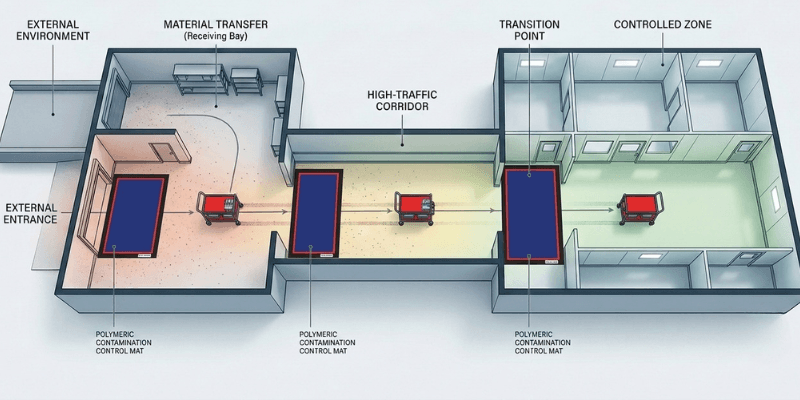
How can medical device manufacturers prevent contamination during production — and why does the physical route contamination travels through a facility matter as much as the cleanroom itself?

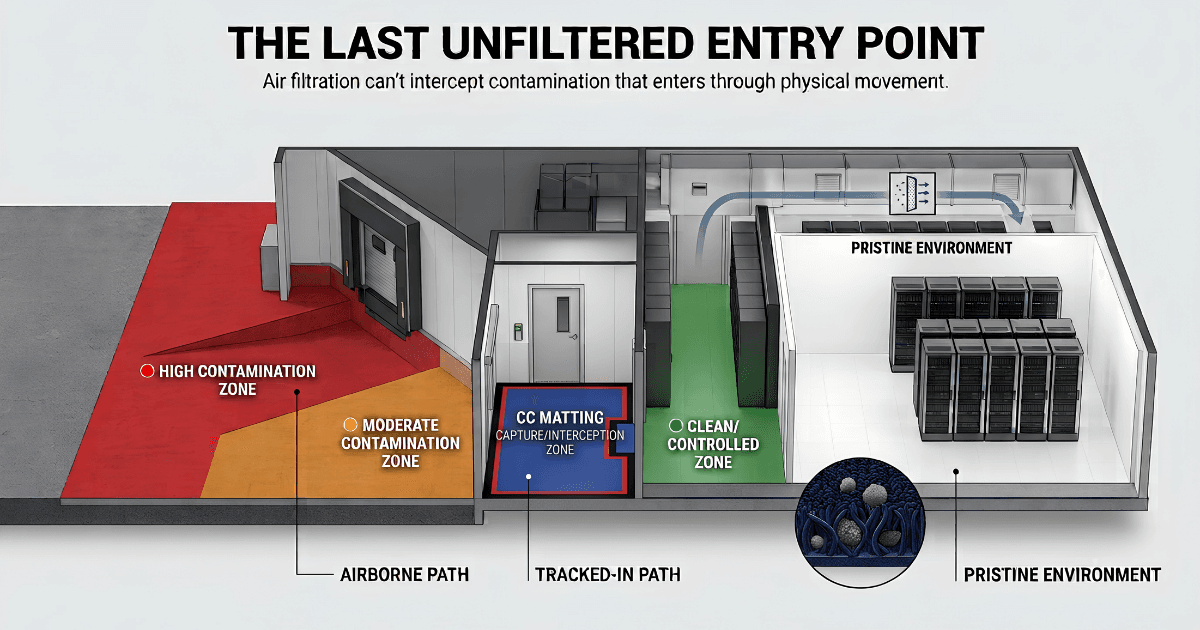
Most contamination discussions in data centers stop at HVAC filtration — but airborne filtration was never designed to catch what walks and rolls in through the front door. This article traces the full contamination pathway, from footwear and wheels at the entrance to the cooling systems and server hardware it eventually reaches, and breaks down where a layered contamination-control strategy — including entrance and transition-zone matting — can actually intercept it before costly downtime occurs.